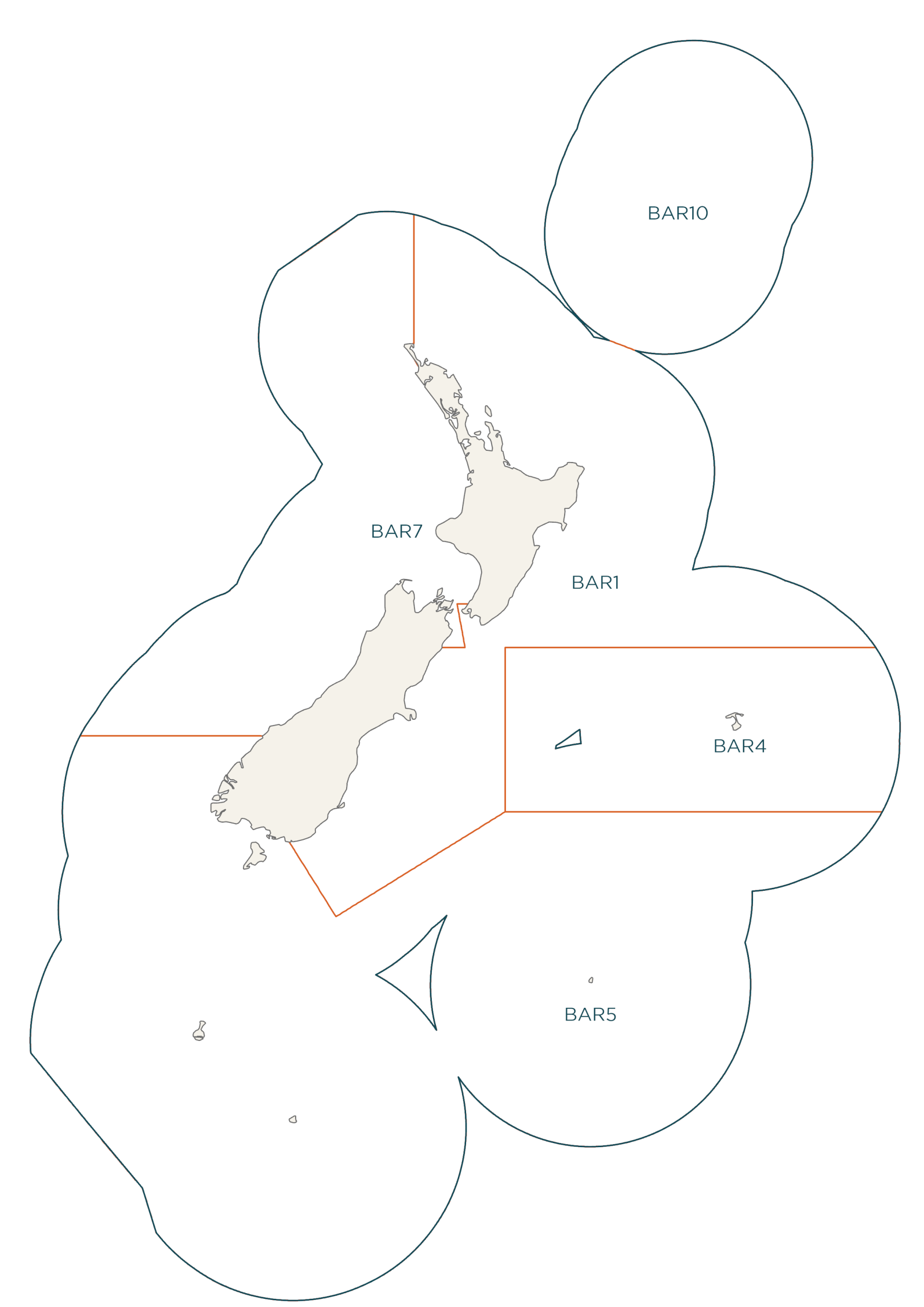
Latin Name: Thyrsites atun
Weight: 1.5-3kg, up to 6kg
Length: 60 - 100cm, reaching 140cm
Family: Barracouta belongs to the Gempylidae family, a group of predatory ocean fish sometimes known as snake mackerels.
- Wild Caught
- Farmed
Location
Sustainability
Fishing Methods
Fishing Methods
Fishing Season
-
JAN
-
FEB
-
MAR
-
APR
-
MAY
-
JUN
-
JUL
-
AUG
-
SEP
-
OCT
-
NOV
-
DEC
Nutrition
Source: Biotin (vitamin B7), Iodine, Phosphorus, Potassium
Good Source: Niacin (vitamin B3), vitamin B12, vitamin D, Selenium, Omega-3 fatty acids
Seafood is a highly nutritious food and is a great source of protein. Many species are low in saturated fat and a number of them are a good source of Omega 3.
Did you know?
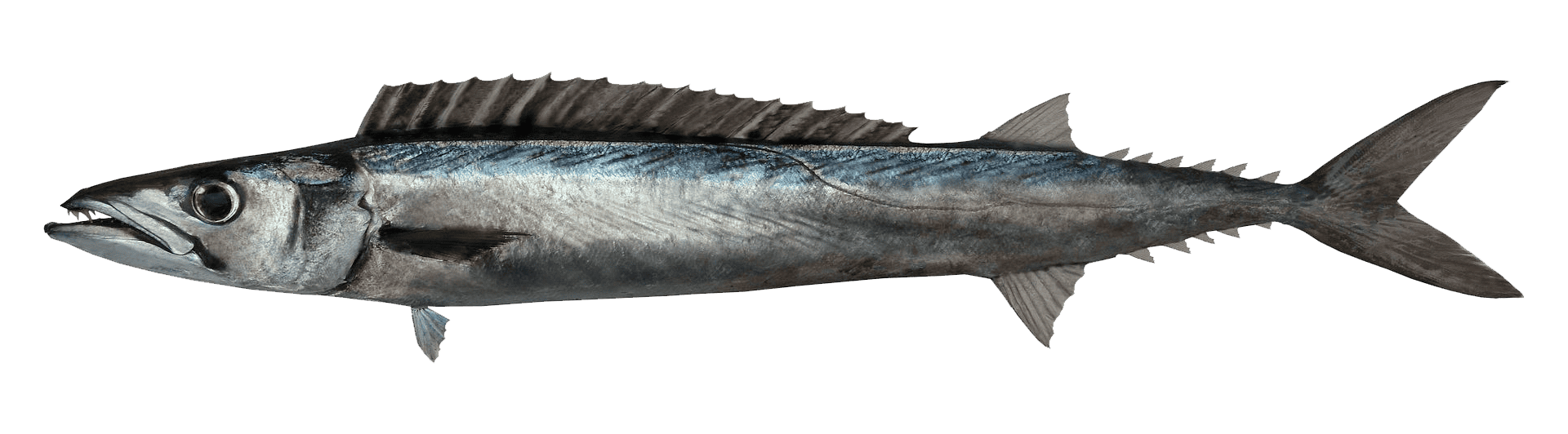
- Barracouta is sometimes called the “Tiger of the Sea” because of its aggressive hunting behaviour and impressive razor-sharp teeth, which can slice through prey with ease.
-
Barracouta was once a staple food for many southern New Zealand communities and remains an important commercial species today, although much of the catch is exported overseas.
Cooking Tips
Barracouta has soft white flesh and a rich flavour. While it is not commonly eaten in New Zealand today, it remains highly regarded in South Africa, where it is known as snoek. It can be smoked, grilled, baked or cooked over a barbecue and is often paired with bold seasonings and marinades.
Try it:
• Smoked
• Grilled
• Barbecued
• Baked