WELLINGTON, New Zealand – 5am, Thursday 3 September 2026 – New research has put a $2.45 billion value on commercial fishing’s contribution to New Zealand, revealing the scale of the jobs, businesses and regional communities supported by the sector – from mum and dad fish and chip shops to local processors and suppliers.
The independent report, commissioned by Seafood New Zealand and prepared by economic consultancy BERL, examines the economic and regional contribution of wild-capture commercial fishing and associated seafood processing in 2025.
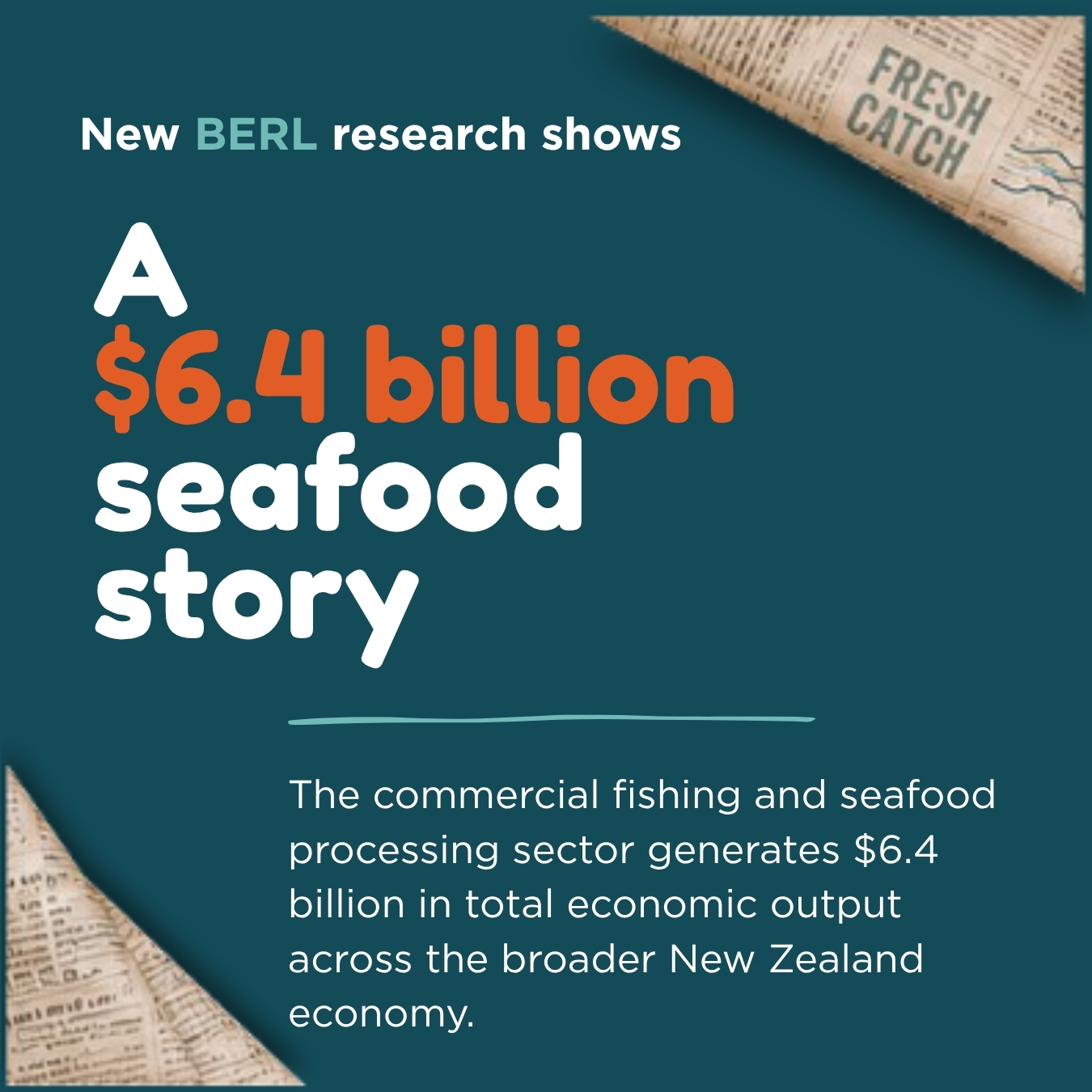
It found fishing and seafood processing directly contribute approximately $2.45 billion to GDP and employ more than 6,200 people. Once the wider activity supported through suppliers, retailers and household spending is included, the industries support more than 14,500 jobs and contribute $6.4 billion to the overall economy.
Seafood New Zealand Chief Executive Lisa Futschek says the findings demonstrate commercial fishing’s contribution extends far beyond what happens on the water.
“The seafood industry has always been important to New Zealand’s economic success, especially in the regions. This new research shows the scale of the contribution the industry makes, both in terms of economic activity and the number of people it employs.
“The report also makes clear that sustainable fisheries are essential to a sustainable future for our communities. The industry’s impact extends well beyond the boats, supporting seafood processing and transport, local businesses, household incomes and regional economies. There is a huge ripple effect.
“The debate around fishing can too easily be framed as a choice between industry and the environment. In reality, the focus should be on how we continue to sustainably manage our fisheries to support both healthy oceans and thriving communities into the future,” Futschek says.
The regional story is equally strong. Nelson, Tasman and Marlborough remain the most reliant on commercial fishing and seafood processing, with around 2,000 full-time equivalent workers and more than 4,500 jobs supported. They contribute more than $750 million to regional GDP, representing more than six per cent of the region’s economy. That’s over 6% of the region’s GDP. Significant contributions also come from Canterbury, Auckland, the West Coast and Southland.
Commercial fishing also makes a significant contribution in Canterbury, the West Coast, Bay of Plenty and Southland.
Pat Nyhon has been a commercial fisherman in Southland for 40 years.
“If you took aquaculture and fishing out of Bluff, there is no Bluff. All the other entities in town rely on the industry. In my business, we supply two local companies with fish, support the port, refrigeration and engineering firms, and we buy from local retailers and manufacturers. And it isn’t just us – we get crews coming down from Dunedin, Nelson, Greymouth, Timaru and the North Island to fish in the winter as well,” he says.
Seafood exports were valued at $2 billion in the year ended March 2025, representing around three per cent of New Zealand’s total merchandise exports.
Futschek says the other part of the conversation is New Zealanders’ access to local seafood.
“Nearly three in four New Zealanders eat seafood each week, but fewer than one in ten of us catch our own fish. A strong commercial seafood sector helps ensure locally caught seafood remains available through supermarkets, fish shops, restaurants and takeaways,” she says.
“When we talk about the future of fisheries, we need to understand the wider context – healthy fish stocks and the marine environment, alongside local food supply, livelihoods and regional economies. Understanding what’s at stake helps us make more informed decisions about the sector and helps ensure Kiwis can enjoy local seafood now and for generations to come.”
The Economic Contribution of Commercial Fishing 2025 report is available here
To download this press release click here
ENDS
For further information or to arrange an interview, contact:
Ema Lees
Acumen New Zealand, on behalf of Seafood New Zealand
021 0836 2145
[email protected]
Enter your details below to create a new account.
Please enter your username or email address. You will receive an email message to log in.