Orange roughy
Name Scientific: Hoplostethus atlanticus
Availability: Year round but mainly from May to August
Attributes Weight: 0.8–1.6kg, up to 3.5kg
Attributes Length: 30–40cm
Location
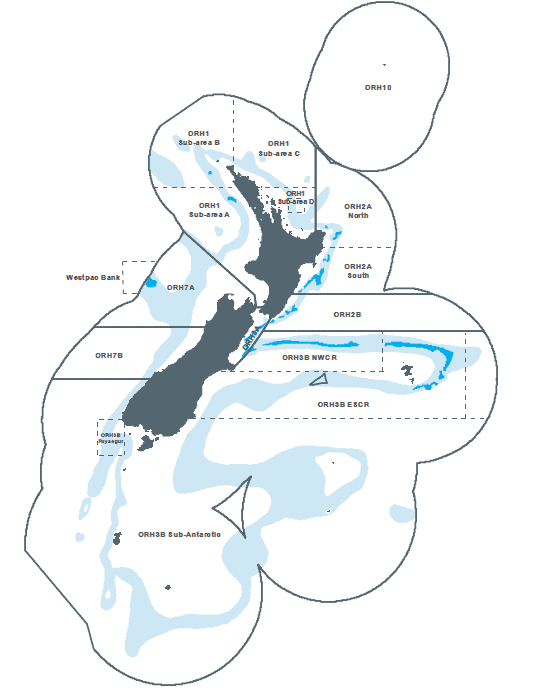
They are widespread in the deep water of most temperate oceans round the world. In New Zealand, they are found at depths of 750 to 1200 metres on the Chatham Rise, off the continental shelf from Gisborne to Kaikoura, off south Westland, and on parts of the Challenger Plateau off the West Coast.
Attributes Physical
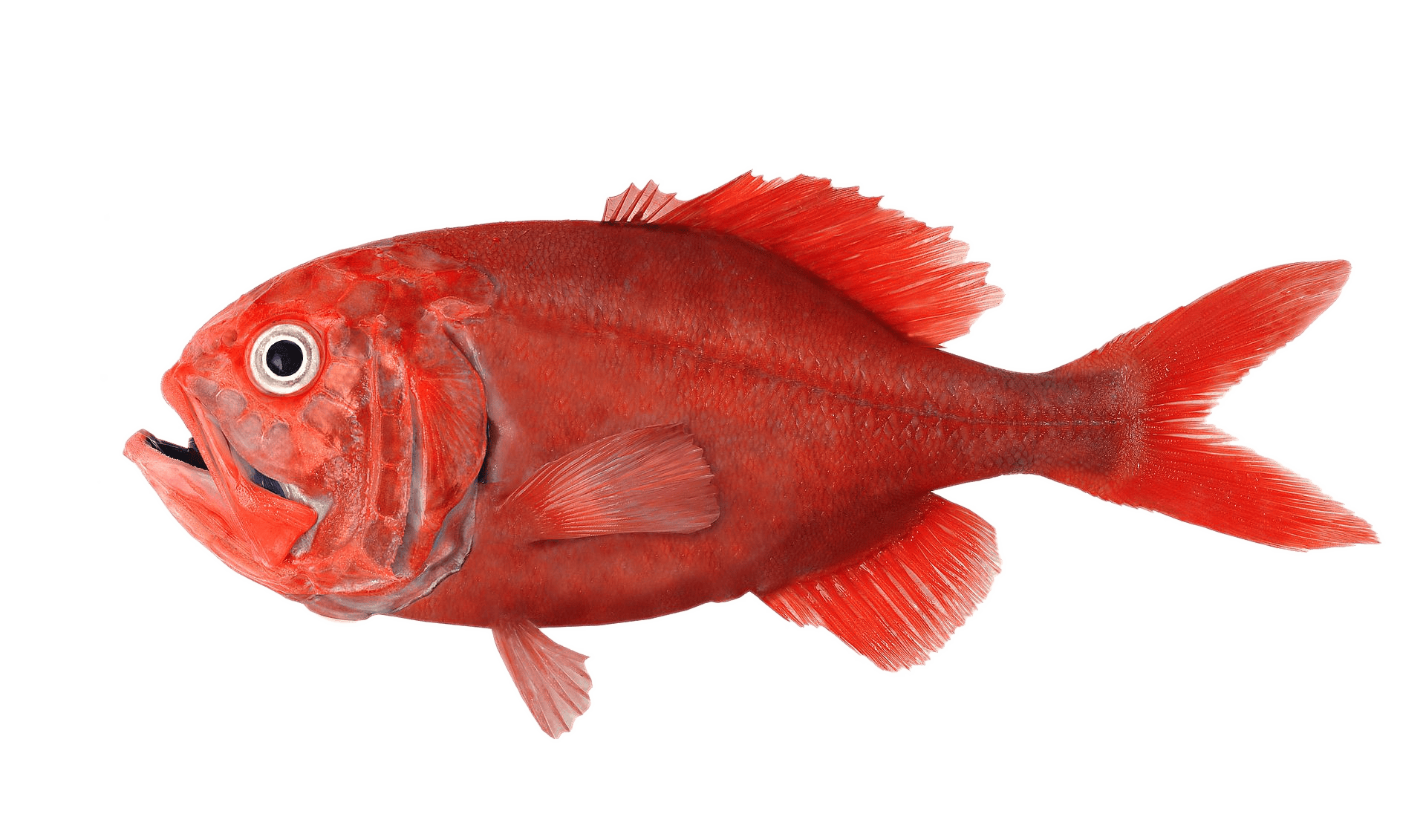
Reddish body that fades to a distinctive orange after capture with a bluish tinge in the belly area. The species has a deep body with conspicuous bony ridges and massive head. The lateral line scales are larger than the small and irregular body scales.
Family
Orange roughy are slow-growing, long-lived fish belonging to the Trachichthyidae family (roughies). There is strong evidence that Orange roughy may live as long as 130 years. Related species: There are three related non-commercial species found in New Zealand. These are Silver roughy (H. mediterraneus), Common roughy (Paratrachichtys trailli), and Slender roughy (Optivus elongatus).
Spawning
Spawning occurs in dense aggregations between June and early August, in several areas from Bay of Plenty to the Auckland Islands.
Sustainability
New Zealand’s key orange roughy fisheries are Marine Stewardship Council certified - the global gold standard for sustainable fishing.
Orange roughy fishing began in New Zealand on the Chatham Rise in the late 1970s. Fisheries in other parts of the EEZ started in the 1980s and early 1990s. Catches peaked in the late 1980s. Since then catch limits and catches have been deliberately decreased, as management has responded to new science, the biomass of the various stocks has been fished down to target levels and our understanding of orange roughy productivity has improved. The annual catch limits for orange roughy under the QMS have been significantly decreased from the limits set for the developing fisheries in the 1980s. Annual harvest strategies are currently based on taking 4.5% (or less) of the adult numbers to ensure healthy and sustainable populations, leaving 21 out of 22 fish each year for the future. When stocks fall below the management target, catch limits are reduced - at times to zero - to provide for stocks to increase in size. Several stocks have been rebuilt in size and catch limits are being increased as they do so. Multiple strategies have been implemented to manage the orange roughy fisheries, ranging from biomass studies, the introduction of new multi-frequency Acoustic Optical Systems and harvest strategy standards, to risk assessment models.
Fishing Methods
They are caught year-round by trawling. Fish are deep-skinned to remove a layer of inedible, oily wax under the skin.
Did You Know
Orange roughy species were originally called 'slimeheads'. They got a name change to 'orange roughy' in the 1970s to make them more appealing to consumers.
Recipe Notes
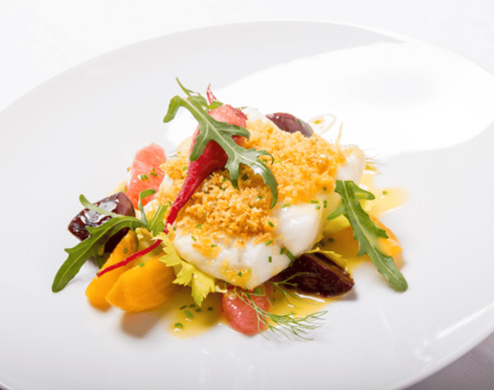
A mild flavour and soft, moist white flesh makes orange roughy a popular choice. Moderate oil content keeps orange roughy succulent and it holds together well in most cooking methods. Use skinned fillets only. Bake, sauté, poach, steam, bbq, casserole or smoke orange roughy; or use in a soup/chowder.
Storage Tips
Orange roughy are deep-skinned to remove a layer of oily wax under the skin. Always fillet and skin whole orange roughy before cooking. Do not cook skin-on orange roughy, whether whole or filleted. Orange roughy is more likely to be available as skinless fillets. However, if buying whole orange roughy, always check the... EYES: Bright and clear cornea, shiny black pupil GILLS: Rosy coloured gills When buying orange roughy fillets, always check the... FLESH: white, semi-transparent and glossy If the fish looks sticky or mushy then it is not fresh.