In 2023, funding for The Moana Project scientific research programme wrapped up. Over the five-year project, hundreds of commercial fishing vessels around the country helped collect over 38 million observations to form a comprehensive ocean temperature monitoring system. To keep the network and its essential scientific data going for as long as possible, its collaborators have transformed the network into the Aotearoa Moana Observing System (AMOS) charitable trust.
“The value of these observations increases the longer we can maintain them,” says Dr Brett Beamsley from MetOcean Solutions. “If we have them for two years, it’s great. If we have them for five years, we can start seeing longer trends. If we have it for 10 years, we start to get a real feel for what’s happening in the ocean.
“It’s really, really, really critical that we maintain that momentum and don’t drop off, because if we drop off and stop it’s going to be 10 times as hard to start it up again.”
Comprehensive, long-term ocean temperature data are essential for marine and weather forecasting, climate change research, fisheries management and more; AMOS gets requests for the data from the scientific community and fishing operators. Moana sensors are typically deployed in waters less than 1,000 metres deep, covering ocean areas that fall out of the scope of more deepwater sensors, like the ARGO floats.
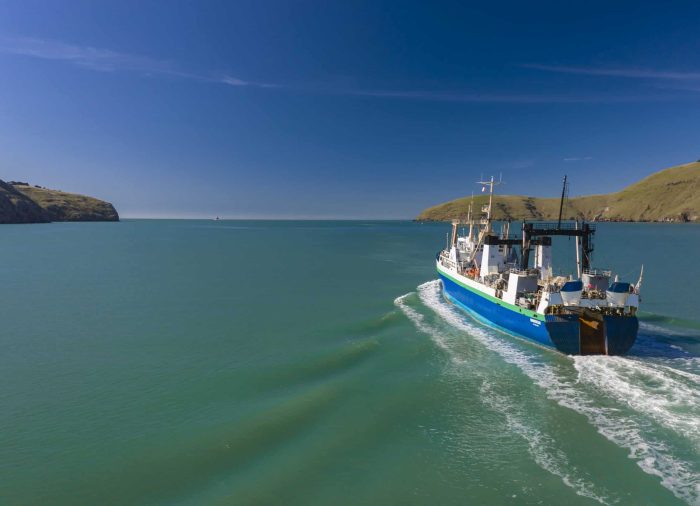
The majority of Moana sensors – 65.5% – were deployed by potting vessels, followed by bottom trawling vessels at 15.2%. Altogether, commercial fishing accounted for well over three-quarters of all participating vessels.
A secure source of funding hasn’t yet come through for AMOS, so while the team looks at financial opportunities they are transitioning to a tax-deductible, user-pays model.
“It’s anywhere between $50,000 to $100,000 per annum to keep the whole project running, which is minuscule for a national observing infrastructure. At $380 a year to maintain a sensor and deck unit, it’s now slightly more than a dollar a day to be in the programme. For anyone who can’t continue, we’ll look at getting the instruments back and refurbishing them and distributing them to people who are interested.”
The contribution covers sensor calibration – which needs to happen every two years – data transmission and processing and ensuring the data remains open access for anyone who uses it, including domestic and international researchers and marine forecast suppliers.
“This is fantastic capability we’ve developed working collectively with industry rather than against it,” Dr Beamsley says, explaining that in the future he hopes to expand the number of participating industry vessels and add additional measuring capability as well – for salinity or dissolved oxygen – to feed into the overall understanding of what the marine environment is doing.
“We’ve worked really hard to build a relationship with the industry and have them as a partner.”
Learn more at amos.org.nz.