Latin Name: Austrovenus stutchburyi
Length: 3–4cm
Family: New Zealand cockles are members of the Veneridae family (venerid clams). They are superficially similar to the European cockle.
- Wild Caught
- Farmed
Location
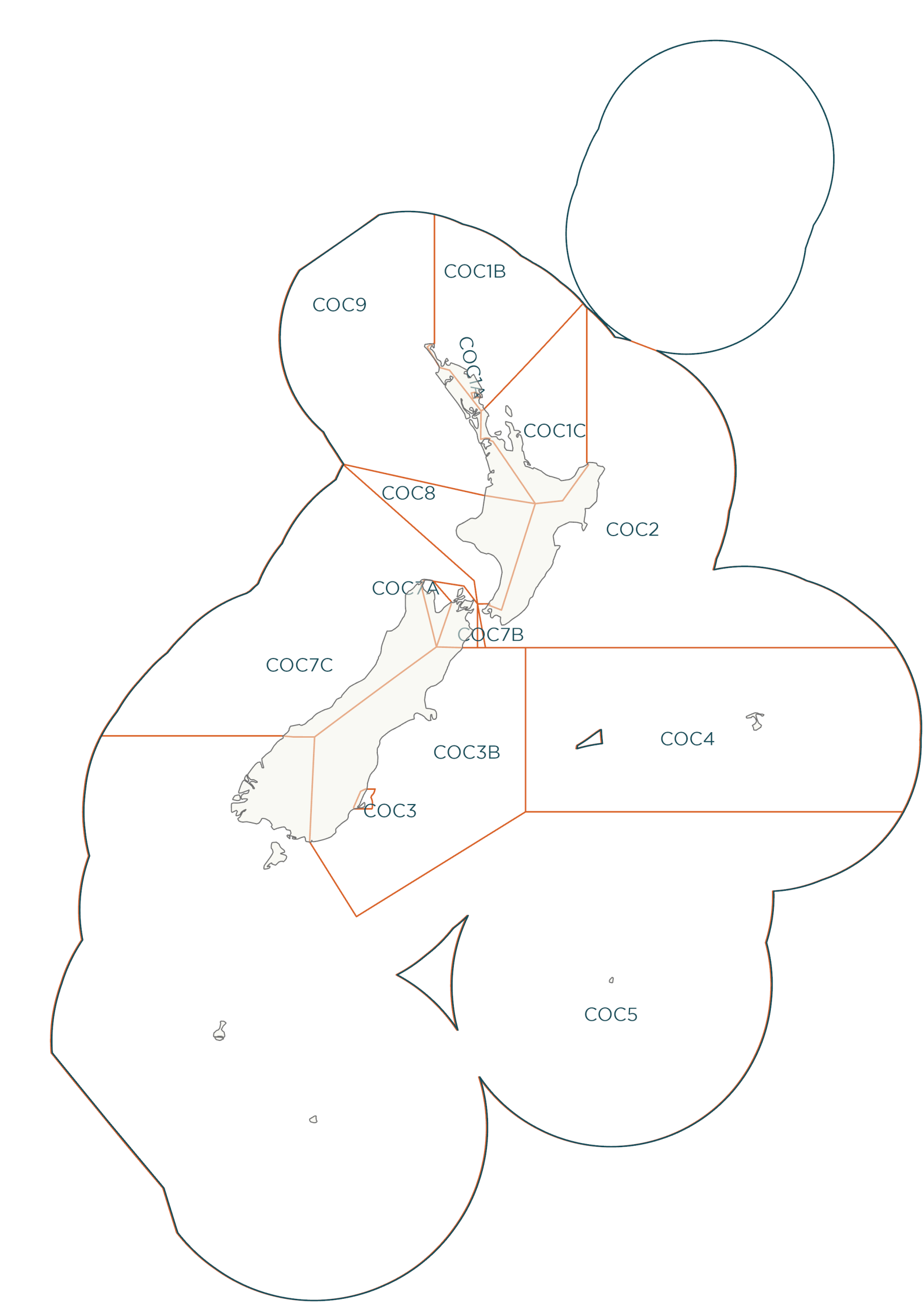
Cockles are widespread in New Zealand harbours and estuaries from the mean tide level to low tide. Found in sediments ranging from soft mud to soft, silty sand, they often form dense beds that contain cockles of similar size. Cockles dig a shallow burrow into the seabed.
Sustainability
Sustainability of this New Zealand fish stock is ensured through the world-leading Fisheries Act and Quota Management System (QMS). The QMS guides the sustainable use of New Zealand fisheries. Find out what the QMS is and how it works.
Fishing Methods
Fishing Season
-
JAN
-
FEB
-
MAR
-
APR
-
MAY
-
JUN
-
JUL
-
AUG
-
SEP
-
OCT
-
NOV
-
DEC
Nutrition
Source: Biotin (Vitamin B7), Folate, Riboflavin (Vitamin B2), Vitamin A, Phosphorus
Good Source: Niacin (Vitamin B3), Vitamin B12, Iodine, Iron, Magnesium, Selenium
Seafood is a highly nutritious food and is a great source of protein. Many species are low in saturated fat and a number of them are a good source of Omega 3.
Did you know?
New Zealand cockles feed on tiny living things in the water by filtering them through their siphon system. They have a ‘foot’ that they extend from their shell to burrow or move around.
Cooking Tips
Cockles have a delicate cream flesh with a low oil content. Versatile and delicately flavoured, cockles are delicious in linguine and make a nice addition to seafood chowders.