Bottom Trawling
Fishing where the fish are
Many of New Zealand’s most popular fish species live on or close to the seafloor. Bottom trawling enables fishers to target these species where they naturally occur, providing New Zealanders with familiar seafood such as tarakihi, gurnard and trevally.
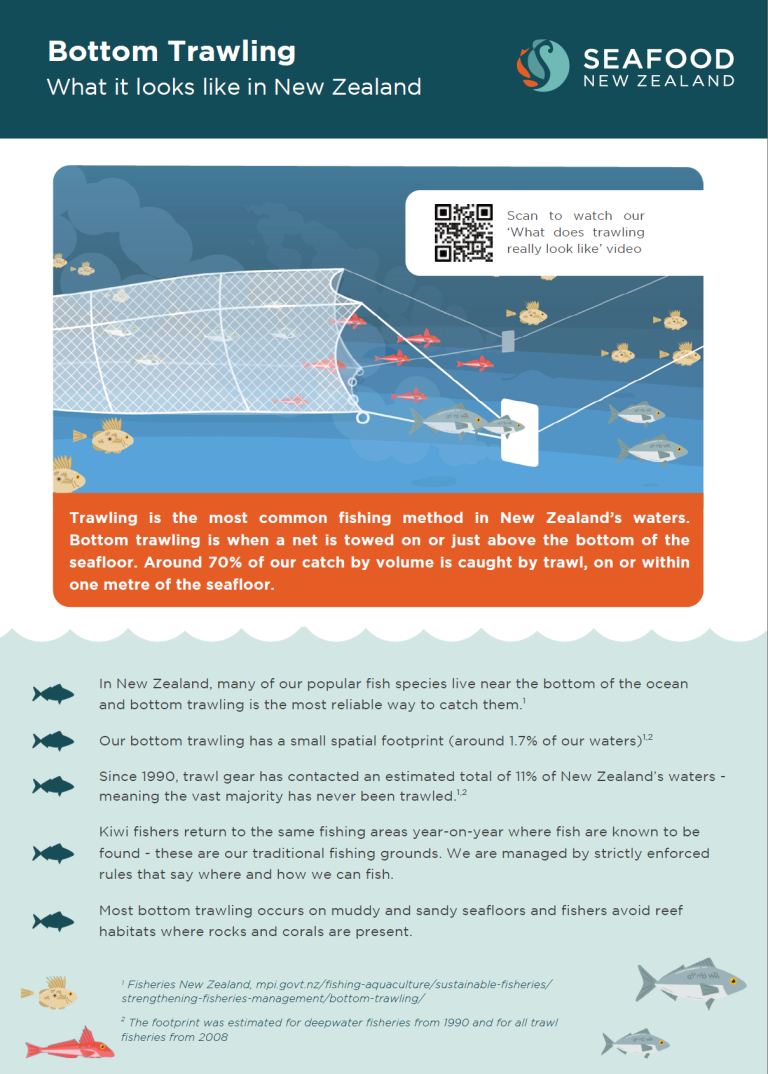
Around 70% of New Zealand’s commercial fish catch by volume is caught using bottom trawling. For many of these species, there is currently no other economically viable fishing method capable of supplying seafood at the volumes New Zealand consumers and export markets rely on.
In New Zealand, bottom trawling takes place in a small, known and managed footprint.
What is bottom trawling?
Bottom trawling involves towing a fishing net on or close to the seafloor to catch fish that live near the bottom of the water column.
It is a targeted fishing method. Rather than continually moving into new areas, New Zealand fishers typically return to established fishing grounds where fish are known to be found.
Across New Zealand waters as a whole, less than 2% is bottom trawled each year.
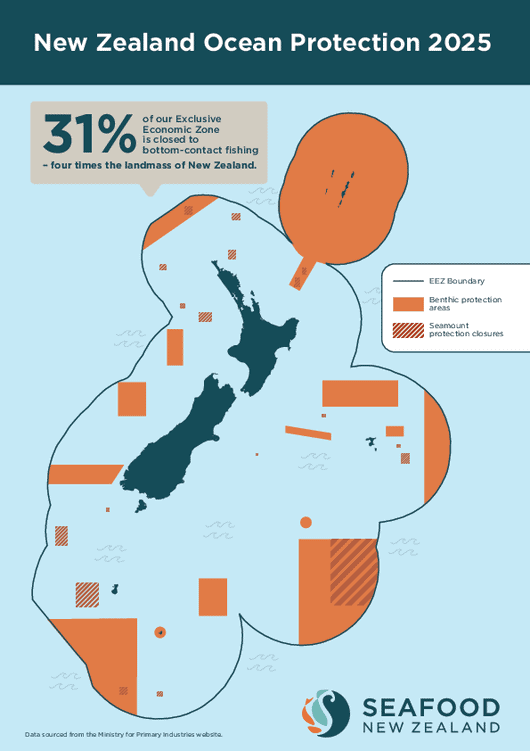
At the same time, 31% of New Zealand’s waters are closed to bottom trawling – an area approximately four and a half times the size of New Zealand.
This means the footprint of bottom trawling in New Zealand is not only relatively small, but also known and managed.
Fishing in established grounds
Just as food production on land tends to be concentrated in established farming areas, fishing also takes place predominantly in known productive grounds.
Bottom trawl gear is designed to operate over suitable seafloor and can be damaged if it is towed across rough or rocky terrain. As a result, the vast majority of trawling takes place over flatter sandy or muddy seafloor.
Returning to established fishing grounds also allows fishers to target fish more efficiently and helps limit the area of seabed contacted by fishing gear.
Fisheries New Zealand analysis shows that the area of seabed contacted by trawl gear has steadily decreased since 2008 across both deepwater and inshore fisheries.
Better technology, more precise fishing
Bottom trawling has changed significantly as fishing technology has improved.
Modern New Zealand trawl gear uses lighter materials and larger mesh sizes that allow smaller fish to escape. Technology on vessels and fishing gear also gives skippers increasingly precise information about where fish are located and how their nets are performing. Sensors can provide information while a net is in the water, helping skippers fish more efficiently and reduce unnecessary towing.
The result is increasingly targeted fishing: the seafood people want can be caught, with shorter and more efficient fishing operations and a smaller overall trawling footprint.
More information on changes in bottom trawl gear is available here.
An important part of New Zealand’s seafood supply
New Zealand has significant populations of demersal fish – species that live on or close to the seafloor. To catch these fish, fishing gear needs to operate where the fish live. For many commercially important species, bottom trawling is the only practical way to catch enough fish to supply consumers at scale.
It plays an important role in ensuring New Zealanders can continue to access locally caught seafood while supporting fishing businesses, processing facilities and communities around the country.
Like every form of food production, fishing has an environmental footprint. New Zealand’s approach is to understand that footprint, manage where fishing occurs, protect areas from trawling, and continue improving the technology and practices used on the water.
Bottom trawling in New Zealand has a footprint that is small, known and managed while playing an important role in providing sustainable seafood for New Zealand and the world
News and research
- The Catch Up: A new visual perspective on trawling
- The Catch Up: Sir David Attenborough and the answers from Aotearoa
- From sea to me: A look at how our fish is caught (Stuff)
- Getting to the bottom of trawling (Stuff)
- Common misunderstandings and misinformation about trawling [PDF]
- The Catch Up: When science meets the bottom trawling debate
- The Catch Up: Bottom trawling and carbon – the facts at last
- Find trawling troubling? Take heart from the data
- PSH: Taking successful sustainable fishing technology to the world