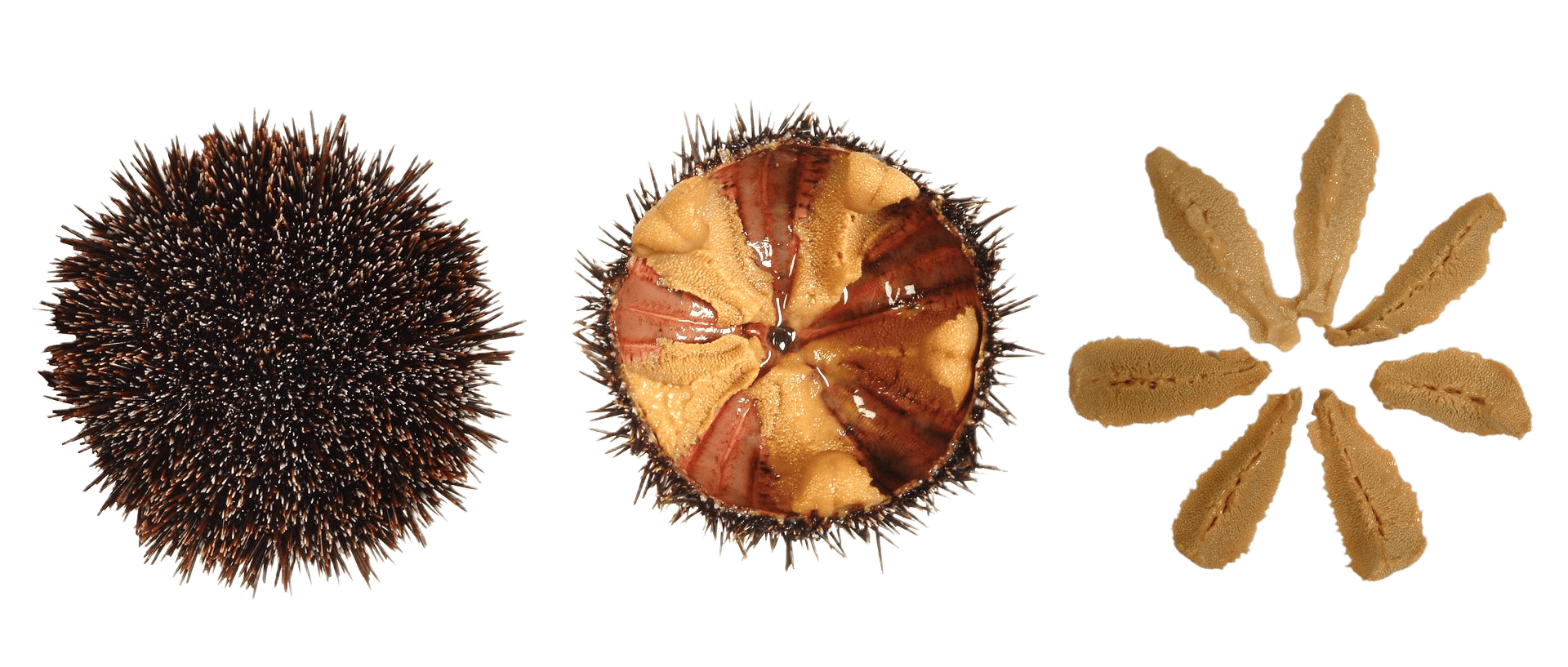
Latin Name: Evechinus chloroticus
Length: Diameter: 8.5–15.0cm
Family: Kina belongs to the Echinometridae family (sea urchins).
- Wild Caught
- Farmed
Location
The species is found only in New Zealand, but there are about 500 species of sea urchins worldwide. Kina are widespread along New Zealand coasts down to 50 metres, with the main concentrations found between the sub-tidal zone and 15 metres. In some places, population densities reach over 50 adults per square metre.
Sustainability
Sustainability of this New Zealand fish stock is ensured through the world-leading Fisheries Act and Quota Management System (QMS). The QMS guides the sustainable use of New Zealand fisheries. Find out what the QMS is and how it works.
Fishing Methods
Fishing Season
-
JAN
-
FEB
-
MAR
-
APR
-
MAY
-
JUN
-
JUL
-
AUG
-
SEP
-
OCT
-
NOV
-
DEC
Nutrition
Source: Biotin (vitamin B7), niacin (vitamin B3), Pantothenic acid (vitamin B5), Riboflavin (vitamin B2), vitamin E, Magnesium, Phosphorus, Zinc, Potassium
Good Source: Folate, vitamin B6, vitamin B12, Iodine, Selenium
Seafood is a highly nutritious food and is a great source of protein. Many species are low in saturated fat and a number of them are a good source of Omega 3.
Did you know?
The kina’s mouth has a distinctive five-sided structure, known as Aristotle’s lantern – from Aristotle’s description of a sea urchin. The kina uses this like a set of teeth to grind up its food.
Cooking Tips
Kina is prized for its delicate, smooth, buttery roe; the male roe is silkier, while the female roe is slightly more grainy.