Family: Trevally belong to the Carangidae family (trevallies, kingfishes).
Wild Caught
Farmed
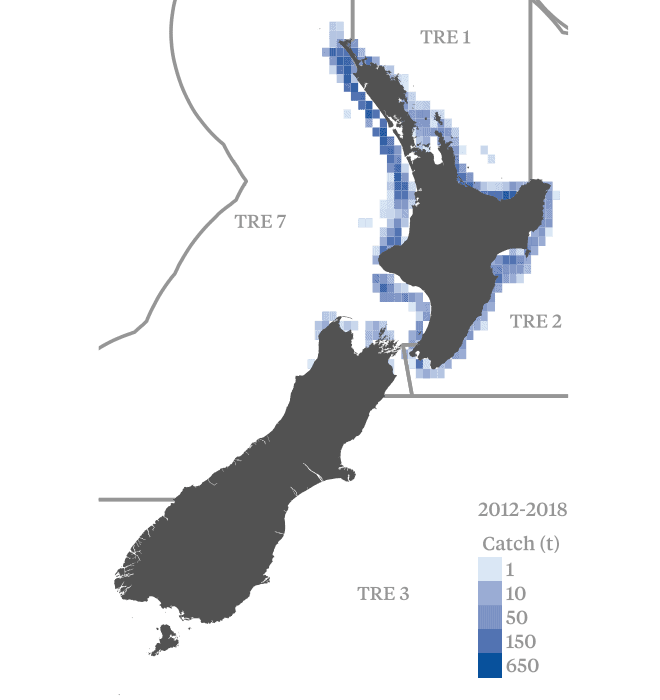
Location
They are both pelagic and demersal in behaviour. Juveniles are found in shallow inshore areas, and from around one year old, the growing fish enter the demersal phase. As adults, they move from the demersal to the pelagic and school at all levels. They grow rapidly, reaching maturity after about five years and can live to 45 years. They feed on krill and other plankton in closely packed surface schools.
Sustainability
Trevally has been caught commercially in New Zealand since at least the early 1900s and is managed under the Quota Management System (QMS). Commercial catch records are available as far back as 1931. Stocks declined off the west coast of the North Island in the 1960s and 1970s, but spawning biomass appears to have remained fairly stable since the 1980s.
Seafood is a highly nutritious food and is a great source of protein. Many species are low in saturated fat and a number of them are a good source of Omega 3.
Did you know?
Seagrass offers shelter to juvenile fish, but it has disappeared from many places. Scientists experimenting with artificial seagrass mats in the Coromandel found lots of Trevally youngsters, among others, taking advantage of their ‘designer homes’.
Cooking Tips
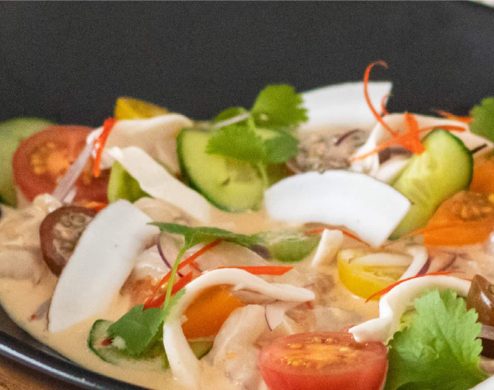
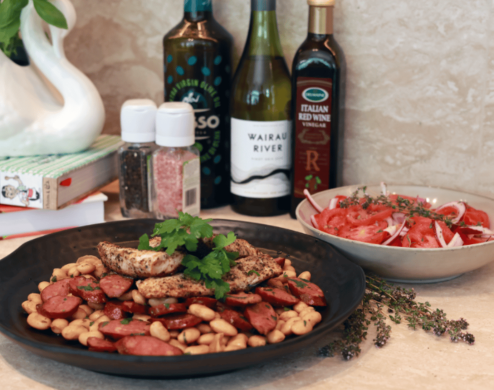
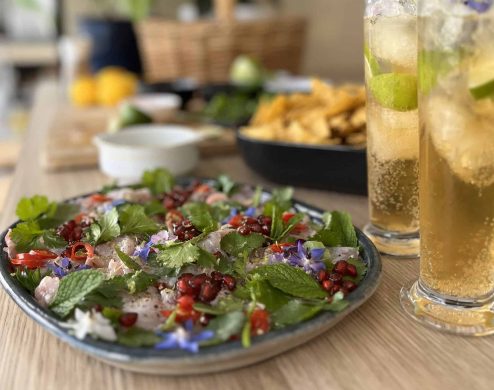
Trevally has medium to soft fillets with a low oil content. It can be baked; curried; marinated; steamed; poached; smoked; or fried.


 Seine
Seine
 Trawl
Trawl